

 AI
On this page
In short
- We are certified to ISO/IEC 27001:2022 and ISO 9001:2015 across all five offices.
- Every account is personal, access is kept to what each job needs, and sign-in is protected by multi-factor authentication.
- Client data stays in the client’s own environments and never goes into public AI tools.
- Filling in a security questionnaire about us? Start here, and email compliance@arcsen.com for anything else.
1Overview
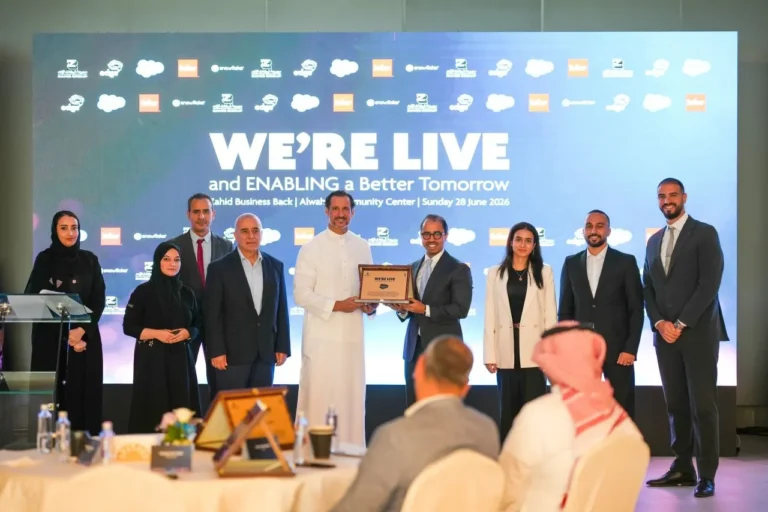
Arcsen holds two certifications from an accredited, independent certification body: ISO/IEC 27001:2022 for information security and ISO 9001:2015 for quality management. Both were issued on 9 November 2026. They run for three years, and the auditors come back every year to check we still meet them.
They cover all five of our offices, in Dubai, Riyadh, Jeddah, Doha and Cairo, and the work we do for clients: designing, building, integrating and supporting Salesforce, MuleSoft, Tableau, Sitecore and Oracle platforms.
This page is a summary for clients and their security teams. The detail sits in three documents: our Information Security Policy, our Code of IT Security and our Data Privacy Policy.
2Organizational security
2.1 Who is responsible
Our leadership team owns information security risk and funds the work to manage it. A security lead coordinates our policies, keeps track of risks and runs the response when something goes wrong. On each engagement, the engagement lead makes sure the team follows our rules and the client’s. Our compliance team looks after data protection, and you can reach them at compliance@arcsen.com.
2.2 Policies
The Information Security Policy applies to every Arcsen entity, every employee and contractor, and any third party with access to our information or systems. The Code of IT Security turns it into day-to-day rules, and the Data Privacy Policy covers personal data. We review all three at least once a year.
2.3 Risk management
We assess our information security risks at least once a year, and again whenever our business, services or technology change in a meaningful way. Each risk and the action taken on it is recorded. Leadership reviews the most serious ones.
2.4 Information classification
| Level | Meaning | Examples |
|---|---|---|
| Public | Approved for publication | Website content and published insights |
| Internal | For Arcsen people and authorized partners | Internal guidance and non-sensitive project plans |
| Confidential | Limited to the people who need it | Client data, proposals, commercial terms and personal data |
| Restricted | Highest sensitivity, strictly controlled | Credentials and keys, sensitive personal data and security findings |
Client information starts at Confidential unless the client agrees otherwise. The higher the level, the tighter the rules on who sees it, how it is shared and where it is kept.
2.5 Accounts and sign-in
Everyone at Arcsen has their own account; we do not use shared logins. Our email and collaboration tools run on Microsoft 365. Multi-factor authentication is switched on for email, collaboration tools, code repositories, admin consoles and remote access.
Our people keep their passwords in a company password manager, with a long, unique passphrase for each account. If someone thinks an account has been compromised, they change the password and report it straight away.
2.6 Access rights
People get the access their work needs, for as long as they need it, and no more. Access is set up when someone joins, adjusted when they change role and removed when they leave, including access to client systems. Admin rights are limited to named people, and we review who has access to what on a regular basis.
2.7 Suppliers
If a supplier will handle our information or a client’s, we check their security first. Their contracts include confidentiality, security and data protection terms, and we review our critical suppliers regularly. On client work, we only bring in subcontractors when our contract with the client allows it, and they sign up to data protection terms at least as strict as ours.
2.8 Artificial intelligence
For work, our people use only the AI tools Arcsen has approved. Client data, personal data and confidential Arcsen information do not go into public AI tools. When a client wants AI used on their data, it happens inside the platform and settings they have approved, for example Agentforce in their own Salesforce org.
Whoever uses an AI tool checks the output for accuracy, security and bias before it goes anywhere, and remains responsible for the work.
2.9 Incidents
Anyone at Arcsen who suspects a security incident or a personal data breach reports it at once to compliance@arcsen.com and to their manager. Nobody gets into trouble for a report made in good faith. We contain the incident, find the cause and restore normal service. Affected clients hear from us without undue delay, and within any deadline in their contract. Where we are the controller, we also notify regulators and individuals when the law requires it. Afterwards we record what happened and fix what let it happen.
2.10 Backup and recovery
Critical company data is backed up, and we test those backups regularly to make sure they can be restored. We rely on cloud services with built-in resilience, and we plan for losing an office, a system or a supplier so that we can keep supporting clients, including those on managed services. Clients can ask us for our disaster recovery arrangements.
3People security
3.1 Joining Arcsen
Every employee signs a non-disclosure agreement and confidentiality obligations as part of joining. Everyone also takes security awareness and data protection training in their first weeks, and again at regular intervals: phishing, handling client data safely and how to report an incident. Consultants and developers get additional training in secure development and the security features of the platforms they work on.
3.2 Day-to-day rules
The Code of IT Security applies to employees, contractors and subcontractors alike. When a client’s rules are stricter than ours, our people follow the client’s rules on that client’s work. Breaking our security or privacy rules can lead to disciplinary action, up to termination of employment or contract.
3.3 Leaving an engagement or the company
When someone rolls off an engagement, they delete any local copies of client data and hand back their access. When someone leaves Arcsen, their access to our systems and to client systems is removed promptly, and their laptop is wiped before it is reused or disposed of.
4Physical security
Entry to our offices is controlled. Visitors sign in at reception and are accompanied while they are with us, and our offices are covered by CCTV.
Our people keep their desks clear of confidential papers and shred them when they are done. Screens are locked whenever someone steps away, and laptops are never left unattended in public places or in cars. When travelling, our people take only the devices and information they need. A lost or stolen device is reported immediately so we can lock it down.
5Technological security
5.1 Laptops and networks
Arcsen work happens on company-managed laptops, or on devices a client provides and controls. Our laptops have full-disk encryption, automatic screen lock, a supported operating system, current security updates and endpoint protection. Software comes only from approved sources. Away from a trusted network, our people use a mobile hotspot or the company VPN.
5.2 Encryption and storage
Data is encrypted in transit, and at rest on our laptops and in our cloud services. Work is stored and shared only in approved systems, with access limited to the people who need it. When information is no longer needed, it is deleted securely.
5.3 How we build
We build security in from the start. Code and configuration live in approved repositories and are peer reviewed before release. Passwords, keys and tokens are never written into code, configuration files or tickets; integrations use the platform’s own secure credential stores, such as Named Credentials in Salesforce and secure properties in MuleSoft.
Development, test and production environments are kept apart, and changes go through the client’s change and release process. Integration users and connected apps get only the permissions they need. We follow each platform’s security guidance and test for common weaknesses before anything goes live.
6Client data and privacy
6.1 Our role
When we design, build, migrate, integrate or support a client’s systems, we usually act as a processor. That means we handle personal data only on the client’s documented instructions, as set out in our contract (such as our Master Service Agreement), any data processing terms and the statement of work.
6.2 Inside client environments
Our people sign in with accounts the client issues or approves, with the least access the task needs. Client data stays in the client’s environments and approved tools. It does not go onto personal devices, personal storage or personal email.
We build and test in sandboxes with masked or test data, unless the client approves real data for a specific task. At the end of an engagement, we delete client personal data as our contract sets out, unless the law requires us to keep it.
6.3 Privacy by design
What we build depends on the platform and the client, but it usually includes role-based permissions and field-level security, consent and communication preferences, only the fields the use case needs, and retention rules for data that is no longer needed. Where the client licenses them, we use tools such as Salesforce Shield Platform Encryption for sensitive fields and Salesforce Data Mask & Seed to mask personal data in sandboxes.
6.4 Laws and transfers
We follow the data protection laws that apply to our work, including the UAE Personal Data Protection Law (Federal Decree-Law No. 45 of 2021), the Saudi Personal Data Protection Law (Royal Decree No. M/19 of 1443H, as amended), Qatar’s Law No. 13 of 2016, Egypt’s Law No. 151 of 2020 and, where they apply, the EU and UK GDPR. Personal data crosses borders only in line with those laws and our contracts, using safeguards such as the EU standard contractual clauses or their UK equivalent where required.
7Certifications
| Standard | Covers |
|---|---|
| ISO/IEC 27001:2022 | Information security management |
| ISO 9001:2015 | Quality management |
There is more on what the certificates cover in our announcement.
8Reporting a vulnerability
If you think you have found a security weakness in arcsen.com or another Arcsen system, email compliance@arcsen.com with what you found and how to reproduce it. Please do not access, change or delete data that is not yours, disrupt our services, or make the issue public before we have fixed it. We will confirm we have your report and keep you posted while we look into it.
Running a security review?
Our compliance team can help with questionnaires and supplier assessments. Email compliance@arcsen.com, or write to Groupe Arcsen FZCO, Level 54, Almas Tower, Jumeirah Lakes Towers, Dubai, United Arab Emirates.