


 AI
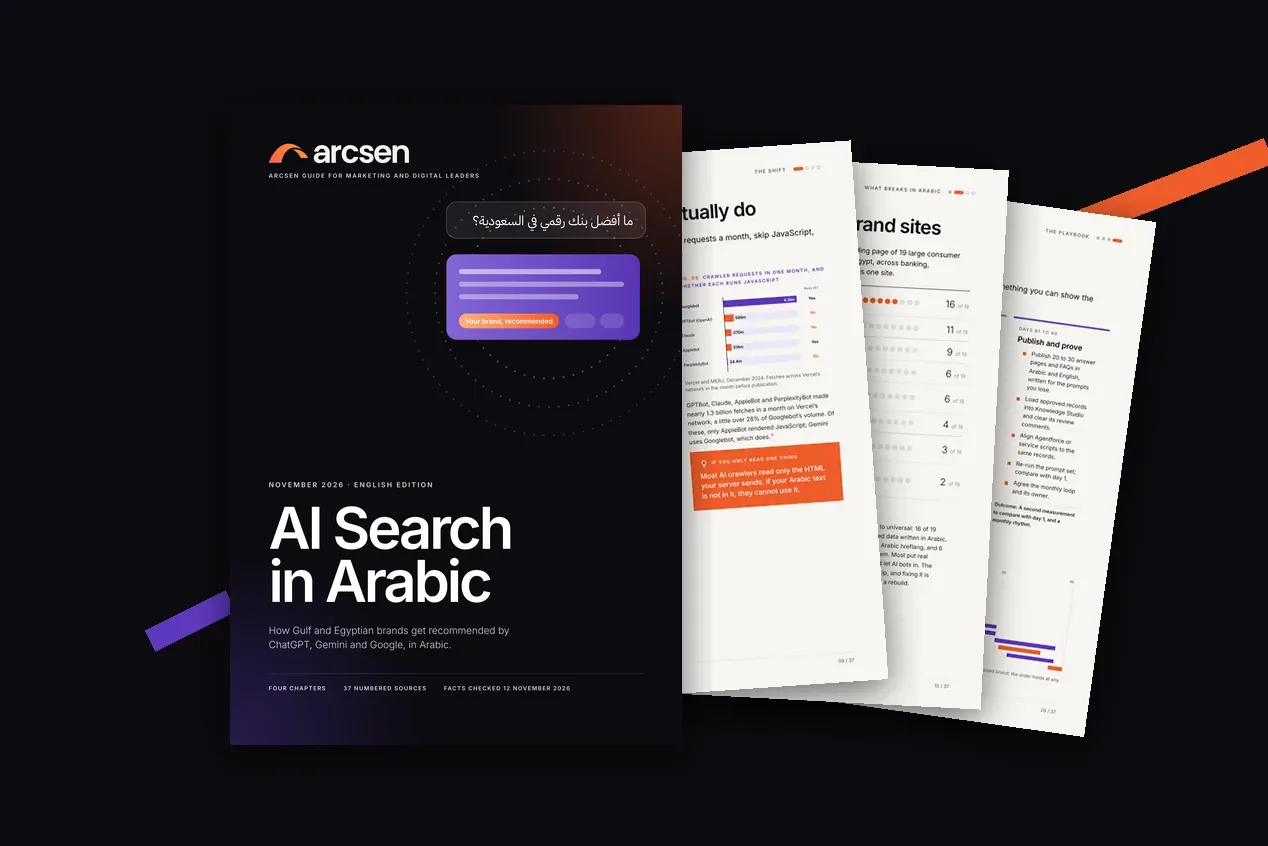
- 37Pages
- 4Chapters
- 37Sources
0.6% of websites whose language is known are in Arabic. When an assistant cannot find your answer in Arabic, it writes one from someone else’s pages.
Our short answer
Most Arabic AI problems are not language problems. They are delivery, structure and consistency problems that hit the Arabic site harder: text built by JavaScript that AI crawlers cannot read, structured data in English only, and facts that differ between the two languages.
So treat AI answers as a channel with its own numbers. Measure how often you are named in Arabic, fix what bots cannot read, ground the assistants in approved Arabic facts, and repeat every month. The guide sets out the loop, the tools and a 90-day plan, with the evidence for each step.
- 51%of B2B software buyers start research with an AI chatbot more often than with Google, against 29% in G2’s 2025 report
- 66%of Saudi consumers aged 18 to 50 use AI tools, up from 49% a year earlier (Deloitte, May 2026)
- 16 of 19brand sites in our check of the region have no structured data written in Arabic
- 0.6%of websites whose language is known are in Arabic (W3Techs)
What each chapter concludes
The shift
Discovery moved from ten blue links to one written answer. In the Gulf that answer is written in two languages, and the Arabic one is the weaker.
If you only read one thingIn a December 2024 study, the crawlers behind ChatGPT, Claude and Perplexity did not run JavaScript, so they missed any text a site builds in the browser.
What breaks in Arabic
Seven failure points, the name problem, and what we found when we checked the Arabic pages of 19 large consumer brands in Saudi Arabia, the UAE, Qatar and Egypt.
If you only read one thingCheck the raw HTML of your Arabic home page. If the Arabic words are not in it, no crawler that skips JavaScript will ever read them.
The platform
Measure, serve, ground, create, connect: how SitecoreAI, Scrunch and Salesforce fit one loop, including what Scrunch launched in Symposium week and what was only shown on stage.
If you only read one thingStart with measurement. Until you can see how often you are named in Arabic, every fix is a guess.
The playbook
A 90-day plan, seven numbers to track, who owns what across seven teams, and two checklists to hand to your web and marketing teams.
If you only read one thingName one owner for AI visibility across both languages. In our experience, split ownership is the most common reason Arabic falls behind.
Summarized from AI Search in Arabic, an Arcsen guide, 37 pages, November 2026. Every figure in the full guide has a numbered source, checked on 12 November 2026.
Quick answersQuestions this guide answers
Why do AI assistants describe some brands worse in Arabic than in English?
Can AI crawlers read Arabic text that is built with JavaScript?
What is the most common gap on Arabic brand sites?
Can Scrunch track prompts in Arabic?
What did Scrunch launch in Sitecore Symposium week 2026?
Do I need SitecoreAI to start?
Who it is for
Who own the brand, the website and the budget for being found, in Arabic and in English.
Who decide what the assistants can quote, and who hear how customers really ask.
Who run the CDN, the firewall rules and the page templates that decide what bots can read.
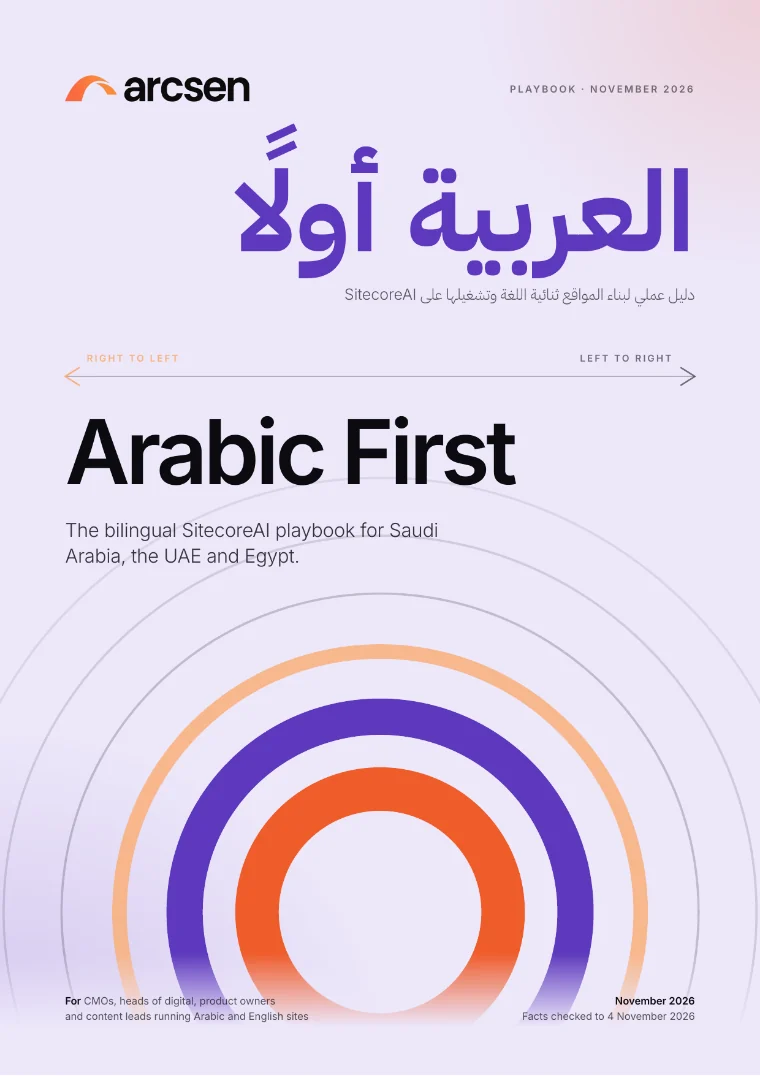
From Arcsen’s Sitecore practice: a Sitecore partner and a Salesforce Summit partner with teams in Riyadh, Jeddah, Dubai, Doha and Cairo.